The North Jersey Commuter's Guide: Trains, Buses and Drive Times to NYC
Which North Jersey towns have a one-seat train ride to Penn Station, where the Hoboken-division lines actually go, and how your commute should shape your home search across Bergen, Passaic, Essex and Morris counties.
Robert Sivori · 4 min read
Almost every North Jersey home search I've worked in twenty years starts with the same question: how do I get to work? The answer decides more than your morning — it shapes which towns belong on your list at all. Bergen, Passaic, Essex, Morris, Union and Sussex counties all offer very different commutes, so before we talk kitchens, let's talk trains.
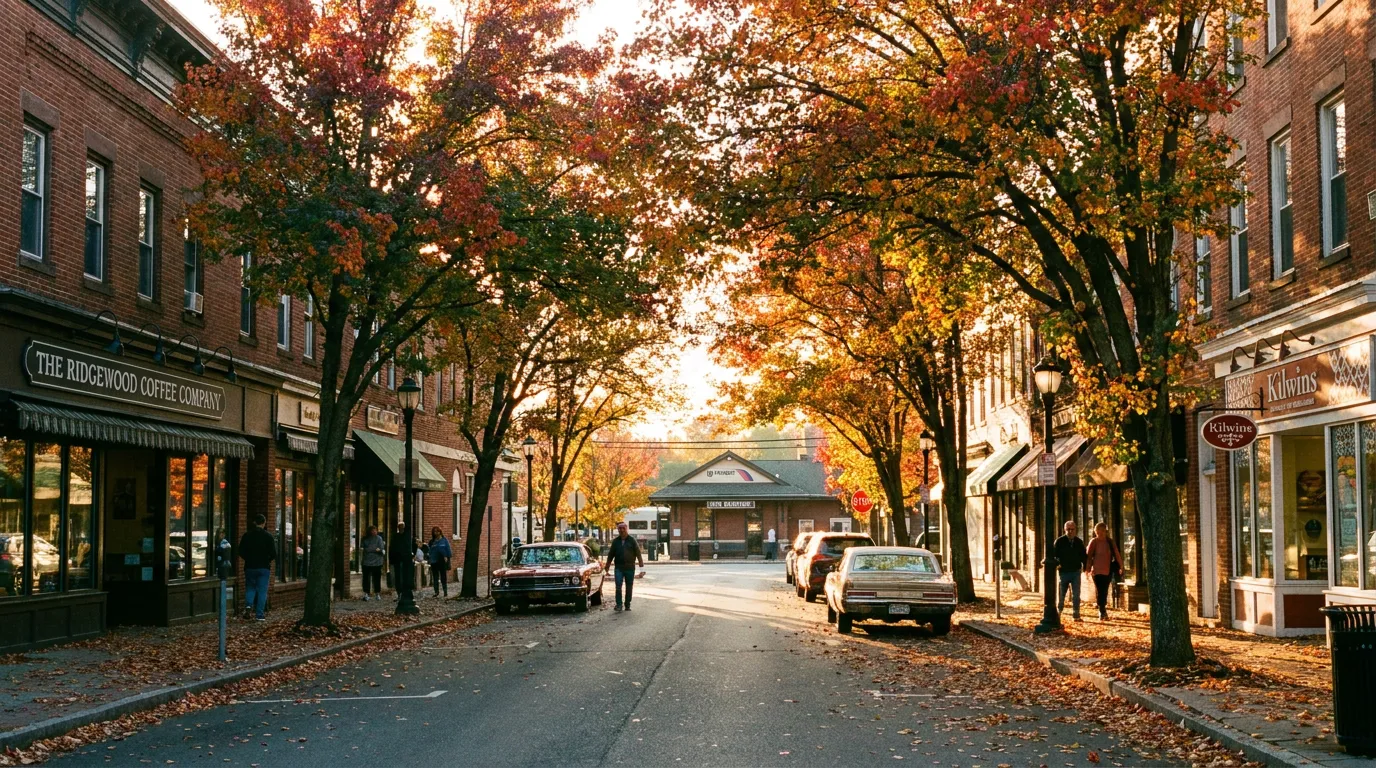
The gold standard is a one-seat ride. NJ Transit's Midtown Direct service runs straight into New York Penn Station with no transfer, and it's the reason certain towns are perennial commuter favorites. On the Morristown Line, that means towns like Morristown, Madison, Chatham and Summit. On the Montclair-Boonton Line, Montclair — with its multiple stations — along with Glen Ridge and Bloomfield get the same direct service. When buyers tell me they want the easiest possible ride to Midtown, these are the corridors we look at first.
Bergen and Passaic counties work differently. The Main Line, the Bergen County Line and the Pascack Valley Line all run to Hoboken Terminal — so a Manhattan-bound rider either transfers at Secaucus Junction for Penn Station or rides into Hoboken and connects to PATH or ferry. That covers classic towns like Ridgewood and Glen Rock on the Main and Bergen County lines, and the Pascack Valley communities such as Westwood, Hillsdale, Emerson, Oradell and River Edge. The transfer at Secaucus is quick and well-practiced, but it is a transfer — and buyers weigh that.
That's the nuance most listing descriptions skip: 'train town' is not one thing. A one-seat Midtown Direct town and a Hoboken-division town can be equally lovely, but they sell to slightly different commuters. Knowing which kind of rail service a town has — before you fall in love with a house there — saves a lot of heartache.
Don't overlook the bus. Large parts of Bergen and Passaic counties are bus country, with routes feeding the Port Authority Bus Terminal and connections at the George Washington Bridge. For many neighborhoods along the Route 4 and Route 17 corridors, the express bus is the everyday commute — and for some riders it beats driving to a station and parking.
Drivers have their own map. Interstate 80 is the east-west workhorse across Passaic and Morris counties and out to Sussex; the Garden State Parkway runs the north-south spine; I-287 arcs through Morris County; and Routes 3, 4 and 17 carry the daily load toward the Lincoln Tunnel and the George Washington Bridge. If your office is in Jersey City, Newark or White Plains rather than Midtown, the driving calculus can flip which counties fit best.
Then there's the trade-off question: Sussex County and the far reaches of Passaic offer more land, lake communities and more house for the money — priced, in part, by the longer ride. For some buyers that's a bad trade. For a hybrid worker who commutes twice a week, it can be the best deal in North Jersey.
Here's how I put it to work. First we set your real commute tolerance — door to desk, worst day, not best. Then we pick the corridors that honestly fit it: Midtown Direct, Hoboken division, express bus, or highway. Only then do we talk towns, schools and houses. It's a short conversation that keeps you from touring homes you'd quietly resent by November.
Walk-to-train blocks in the classic commuter towns are perennially in demand, and they earn it. But the right answer isn't the same for everyone — it's the one that matches your office days, your budget and your patience. If you're weighing a move anywhere in North Jersey, call me and we'll map your commute before we map your search.
Thinking about your own move?
Every home and situation is different — North Jersey or the Brazos Valley, let's talk through yours.